
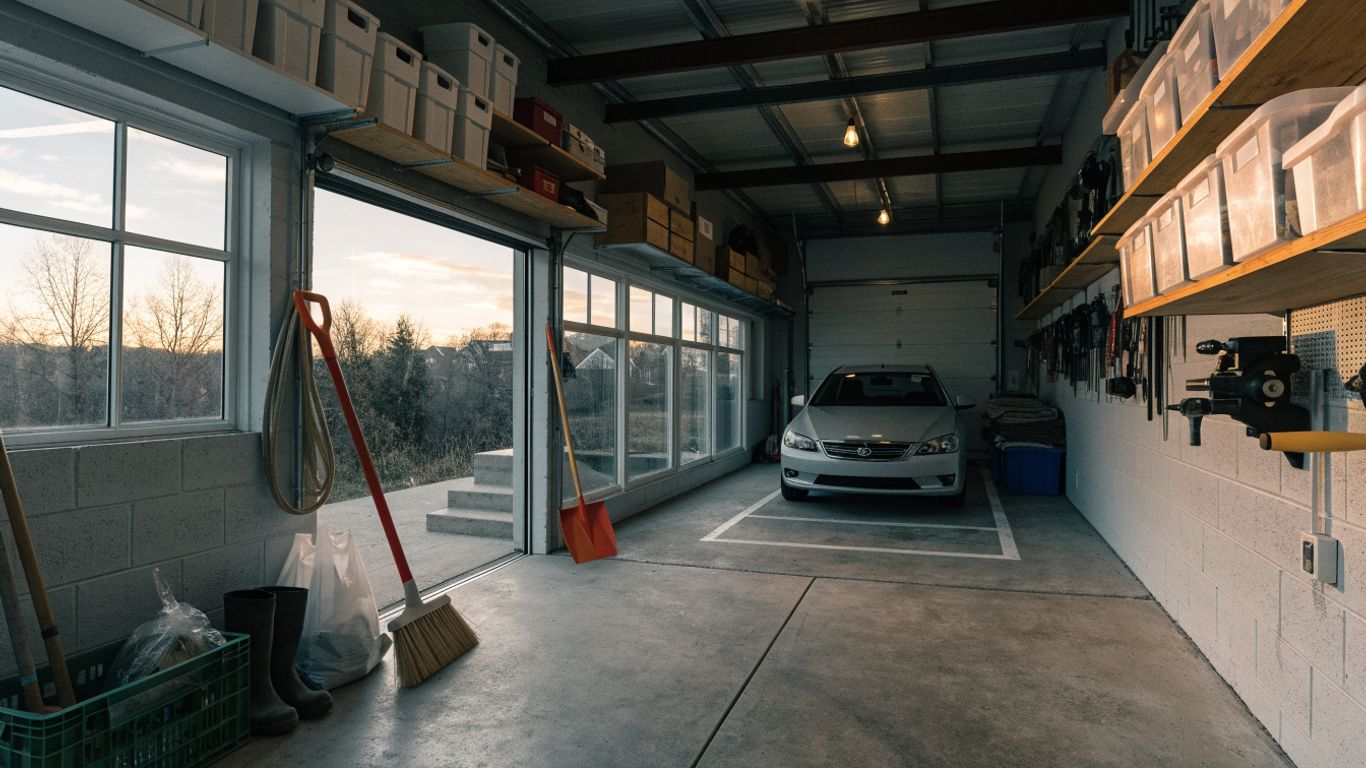
The first real snowfall usually reaches Ottawa in November, and that’s often the week homeowners realize the car no longer fits in the garage. Bikes, patio cushions, half-used paint cans and a lawn mower that quit in August have quietly taken over the parking spot. If you’re working out how to organize your garage before winter, the answer isn’t buying a wall of new storage. Clear out what you don’t use, protect the space the car needs, and put winter gear where you can grab it in a hurry.
Timing matters here. From November 15 to April 1, the City can declare a winter weather parking ban whenever 7 cm or more of snow is forecast, and cars left on the street without a permit can be ticketed and towed. A garage the car actually fits into saves a lot of early-morning scrambling.
How to organize your garage in 7 steps:
- Empty the garage and sort everything into keep, donate, recycle and junk.
- Measure the space your car needs, including room to open the doors.
- Create zones based on how you use the garage.
- Go vertical with shelves, wall racks and ceiling storage.
- Keep winter essentials within reach of the door.
- Protect the floor from salt and snowmelt.
- Do a quick reset after every big snowfall to keep it organized.
Step 1: Empty the Garage and Sort Into Keep, Donate, Recycle and Junk
Start by clearing the floor one wall at a time instead of pulling everything into a single pile. Set up four areas on the driveway: keep, donate, recycle and junk. Make each decision once. If an item goes back into the garage “for now”, it usually stays there for another five years.
On garage jobs across Ottawa, the same items show up again and again: a broken lawn mower, old tires, a treadmill used as a clothes rack, mismatched patio furniture and boxes from the last move that were never opened. These bulky items take up the most floor space, so deal with them first. Once they’re gone, you can see what’s really left to organize.

Don’t buy bins or shelving until the sort is finished. Storage bought too early ends up holding things you were about to throw out anyway.
Too much to haul yourself? The Junk Ninja crew handles junk removal in Ottawa from start to finish, including the lifting, loading and sweep-up. Schedule a free quote and clear the garage before the snow arrives.
What to Get Rid Of Before Winter
Winter is the right time to let go of anything you won’t use before spring. A good test: if the garage were empty today, would you bring this item back in? If the answer is no, it goes.
The most common items worth removing before winter:
- Furniture saved “for the cottage” that never made the trip. Old furniture takes up more floor space than almost anything else.
- Second fridges and chest freezers that no longer keep a steady temperature. These need proper handling because of the refrigerant inside.
- Dead electronics such as old TVs, printers and stereo equipment, which shouldn’t go into regular garbage.
- Yard equipment that has stopped working. If it’s time to dispose of an old lawn mower, drain the fuel first.
Duplicates are another easy win. Most garages hold two or three of the same rake, extension cord or cooler. Keep the best one and let the rest go.
Items the City of Ottawa Won’t Pick Up at the Curb
Not everything can go out on garbage day. The City sets limits on how much you can put out and how bulky items must be prepared, so check Ottawa’s garbage limit before you stack bags at the curb. Leaves and branches go out through the City’s seasonal lawn waste collection.
Paint, propane tanks, motor oil, pesticides and other chemicals are household hazardous waste. They belong at one of the City’s household hazardous waste depots, not in the garbage, and junk removal companies, including Junk Ninja, don’t collect them. Keep these containers closed, labelled and upright until you can drop them off.
| Item type | Best route | Before you decide |
|---|---|---|
| Usable household goods | Donate | Check condition and what the charity accepts |
| Leaves, branches, yard debris | City lawn waste collection | Confirm accepted materials and seasonal dates |
| Paint, propane, chemicals | City hazardous waste depot | Keep sealed and labelled |
| Broken furniture, appliances, bulky junk | Junk removal pickup | Group items together for faster loading |
Step 2: Measure the Space Your Car Actually Needs
Park the car where you want it to sit for the winter, then measure. Most mid-size cars and SUVs are about 1.8 to 1.9 metres wide, and you’ll need roughly 0.75 metres on the driver’s side to open the door and climb out in a winter coat. Add space at the back to open the trunk or hatch.
Mark the car’s footprint on the floor with painter’s tape. That outline becomes a no-storage zone. Note where the steps into the house, the electrical panel and the garage door tracks sit, because these also need to stay clear.
A single-car garage in Ottawa is often only about 3 to 3.7 metres wide. Once the car is parked, that can leave as little as half a metre on each side, so plan storage along the front wall and overhead rather than along the sides.
Step 3: Create Zones Based on How You Use the Garage
Group what’s left by purpose: winter gear, tools, sports equipment, household overflow and long-term storage. Zones make it easier for everyone in the house to find things and, more importantly, to put them back.
Put the zones you use every day closest to the door into the house, and the ones you use once a year at the back or up high.
The Seasonal Swap: Summer Gear Out, Winter Gear In
Think of the swap as a change in access, not a reason to bury summer gear in a corner. Move bikes, the BBQ cover, patio cushions and garden tools to the back wall or overhead. Bring shovels, ice scrapers, salt and the snow blower to the front.
Before summer gear goes into storage, clear out the yard waste that piled up during fall cleanup: bags of leaves, old planters and broken garden hoses. Wet organic material left in a closed garage all winter starts to smell and attracts rodents.
Step 4: Go Vertical With Shelves, Wall Racks and Ceiling Storage
Once the floor plan is set, use the walls and ceiling. Here’s what typical garage storage costs in Ottawa stores:
- Freestanding steel shelving units: about $80 to $200 each
- Wall track or slatwall systems with hooks: about $150 to $500, depending on length
- Overhead ceiling racks: about $150 to $400, installed into the ceiling joists
Keep heavy items at waist height, lighter items up high, and anything you use weekly at eye level. Narrow shelving works better than deep units in a tight single-car garage, because it won’t block the car doors.
For ceiling storage, mount racks only into the joists, keep them clear of the garage door opener and track, and use them only for light, rarely used items such as holiday decorations or camping gear.
Step 5: Keep Winter Essentials Within Reach
Set up a small “winter station” by the door into the house: a shovel, snow brush, ice scraper, a bag of ice melt and a boot tray. In an Ottawa winter you’ll use this corner almost every day, so it should take one step to reach.
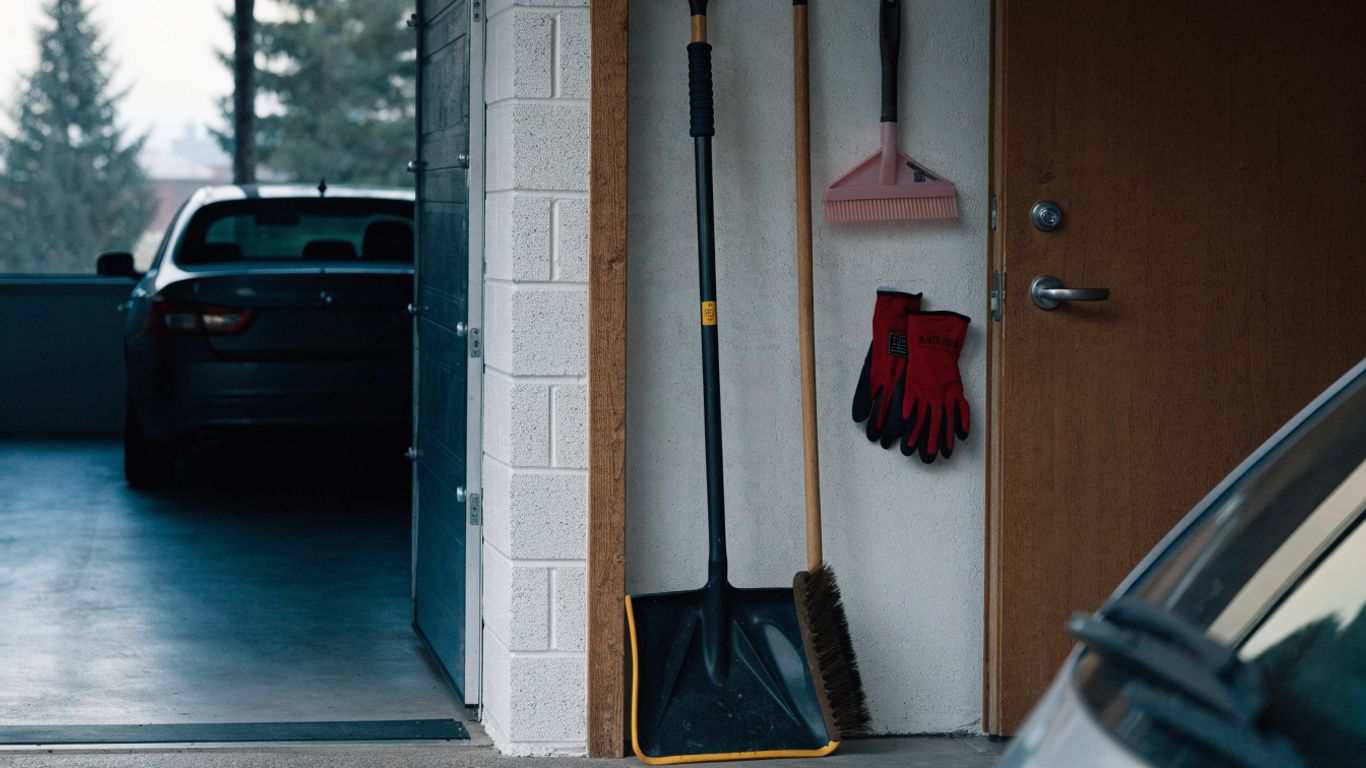
Hang shovels and brushes on wall hooks so they drip-dry instead of leaving puddles. Keep ice melt in a sealed bin, because open bags absorb moisture and clump.
Step 6: Protect the Garage Floor From Salt and Snowmelt
Road salt and slush ride into the garage on the car every day from December to March. Over time, salty meltwater can pit concrete and rust the bottoms of metal shelving.
A garage containment mat under the car (about $100 to $250) catches meltwater before it spreads. Sweep up salt and grit weekly, and squeegee pooled water toward the drain or door after a big melt. Keep cardboard boxes off the floor entirely and use plastic bins on shelves instead, because cardboard soaks up moisture and falls apart by spring.
What Not to Store in Your Garage Over an Ottawa Winter
Ottawa garages regularly drop below freezing, and most aren’t heated. That makes them the wrong place for:
- Paint and liquid products. Latex paint is ruined once it freezes.
- Propane tanks. These should be stored outdoors, upright and away from the house.
- Electronics and batteries. Cold and condensation damage them.
- Canned food and drinks. They can freeze, expand and burst.
- Important papers and photos. Moisture causes mould.
The same goes for old light bulbs and fluorescent tubes kept “just in case”. Recycle them properly instead of leaving them on a cold shelf.
Step 7: How to Keep Your Garage Organized All Winter
A garage stays organized when putting things away is as easy as taking them out. After every big snowfall, take ten minutes to sweep salt, clear the path to the door and hang the tools back up.
Use a “one in, one out” rule: when a new item comes into the garage, an old one leaves. If a zone keeps overflowing, remove items before buying more storage. And keep the taped car outline clear, because the moment one box sits inside it, others follow.
When to Call a Junk Removal Crew Instead of Doing It Yourself
Doing it yourself works when you have a few bags and a trip or two to the depot. A junk removal crew makes more sense when the garage holds:
- Bulky furniture, appliances or exercise equipment that takes two or more people to lift
- More than a pickup truck’s worth of unwanted items
- Old scrap wood, tires or renovation leftovers
- Stuff that has built up over many years and needs to be gone in one day
A typical call before winter is a family with 15 or 20 years of stored items and a weekend to sort it. They decide what stays, and the crew carries everything else out, loads it and sweeps the floor, usually in a single visit. Items are sorted for donation and recycling where possible, so less goes to landfill.
Ready to reclaim your garage before the snow? Book your garage junk pickup online and the Junk Ninja crew will handle the lifting, loading and sweep-up.
Garage Organization FAQs
How long does it take to organize a garage?
A single-car garage that’s moderately full usually takes one full weekend: one day to sort and remove junk, and one day to set up zones and storage. A packed double garage can take two to three days. If the junk is hauled away first, organizing goes much faster, because you’re only arranging what you’re keeping.
What should you do first when organizing a garage?
Sort before you buy anything. Separate everything into keep, donate, recycle and junk, and get the junk out. Only then measure the remaining items and the car’s footprint to choose shelving that fits.
Can Junk Ninja haul away everything in my garage?
Junk Ninja takes most household and garage items, including furniture, appliances, electronics, yard waste, scrap wood and general junk. Hazardous materials such as paint, propane, motor oil and chemicals must go to a City of Ottawa hazardous waste depot. If you’re not sure about an item, contact the Junk Ninja team before your pickup.
